
Custom tea towels can work well in a small gift shop, but profitability depends on the numbers for your shop. A supplier price alone does not tell you whether a product will make money. Include delivery, packaging, selling fees, discounts and unsold stock in your calculation.
This guide gives you a simple way to estimate the contribution per towel, compare designs and ask for a quote without relying on generic retail-price claims.
Start with the full cost per saleable towel
First work out the landed cost per saleable unit: the supplier price plus the costs required to get each towel ready for sale. Depending on the project, this can include artwork preparation or sampling, labels and packaging, freight, insurance, import charges and any units that cannot be sold.
- Supplier cost for the fabric, print, size and finishing
- Artwork, sample or setup costs, spread across the units you expect to sell
- Individual packaging, labels or display materials
- Freight, insurance, customs and import charges
- Payment or marketplace fees, discounts, returns and markdowns
A useful starting calculation is:
Contribution per towel = selling price (excluding collected sales tax) − landed unit cost − selling fees − expected discount or return cost.
To estimate gross margin, divide gross profit by the selling price and multiply by 100. Keep fixed shop costs such as rent and wages separate if you are estimating the whole business’s net profit. This is a planning method; it does not guarantee a particular result.

What changes the economics for a small shop?
Quantity per design. Minimums and any artwork or setup cost can change the unit economics. A lower quantity may reduce the amount of stock you hold, while fixed costs and freight may be spread across fewer saleable towels. Ask for the quote by design and quantity tier.
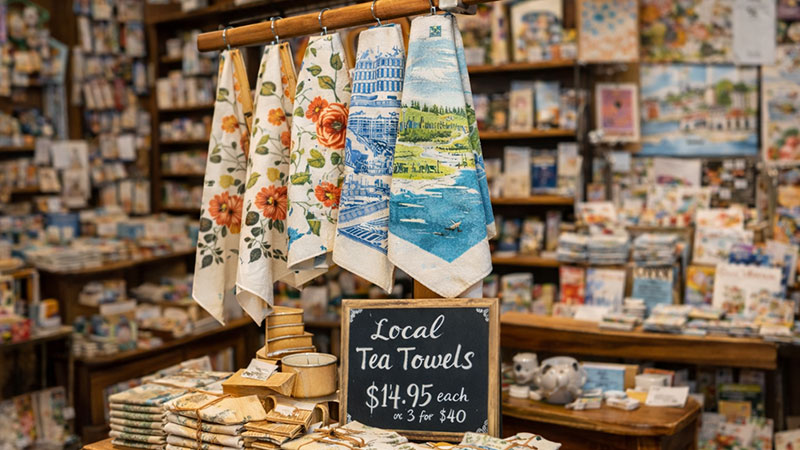
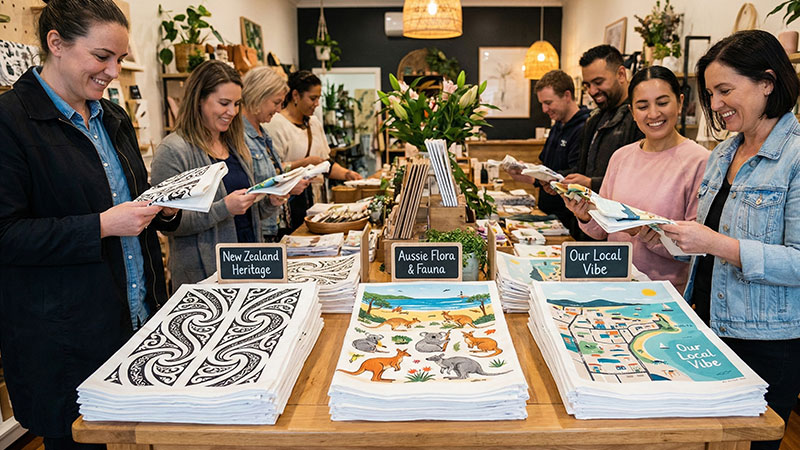
Who will buy the design? A local illustration, museum collaboration, artist range or shop-exclusive pattern may give customers a clear reason to choose your towel. That is a merchandising hypothesis to test with your own audience, not a guaranteed price premium.
How it is presented. Show enough of the artwork for customers to understand the design, and decide whether a label, belly band or gift-ready package fits the shop. Include the cost of that presentation in your calculation.
Where you sell. A direct sale, a marketplace order and a wholesale sale have different fees and margins. Run the calculation for the channel you will actually use rather than applying one retail price to every route.
Test demand without assuming the risk disappears
A small first run can help limit the amount of stock you commit to, but it cannot remove the risk of a design not selling. Before ordering, decide how many designs you can display clearly, how you will track sell-through, and what result would justify a reorder.
BLANC’s current custom-printing page lists a minimum of 25 pieces per design. Confirm the current minimum, sample cost, production schedule and repeat-order terms in your quote, since the full cost and timing depend on the project.
A simple worksheet before you order
- Expected selling price for each channel
- Quoted unit price for the quantity of each design
- Sample, artwork or setup cost per saleable towel
- Packaging, freight, insurance and import costs per unit
- Payment fees, discounts, returns and a markdown allowance
- Expected sell-through period and the stock you can afford to hold
Use your own quote and sales data to fill in the worksheet. If the contribution only works under an optimistic selling price or a very fast sell-through, revisit the quantity, packaging or design plan before committing.
What to include in a custom tea towel quote request
To make the estimate useful, share the artwork or a clear preview, number of designs, quantity per design, preferred size and fabric, print direction, packaging idea and delivery country. Ask for separate pricing at quantities you are considering, plus current sample and production timing.
See BLANC’s custom tea towel options or send your artwork and shop requirements for a project-specific quote. Profitability depends on your costs, selling channel, customer demand and stock decisions; a quote can help you calculate the product cost, but it cannot predict your sales.