Artwork files do not need to be intimidating, but they do need to be clear enough for cotton tea towel printing.
When artists, designers, schools, gift shops or small brands contact us about custom printed cotton tea towels, the artwork is usually the best place to start. It tells us much more than a quantity number can: whether the lines are fine, whether the colours may need checking, whether small text will be readable, and whether the design will still make sense when the towel is folded or packaged.
This checklist is for preparing a custom tea towel artwork file before you ask for a quote or move toward sampling. It is not a technical exam. It is a practical way to reduce the back-and-forth that often happens when a design is beautiful on screen but not quite ready for fabric.
Start With the Final Towel Size
The first artwork question is simple: what size is the design meant to print?
If the artwork is created much smaller than the finished tea towel, small text, thin lines and delicate marks may not hold up when enlarged. If the file is prepared without a real towel size in mind, it is harder to judge borders, repeat scale, image placement and folded presentation.
Before sending a file, check:
- The intended finished tea towel size, if known
- Whether the artwork is portrait, landscape, repeat pattern or placement artwork
- Whether important details sit close to the edge
- Whether the design still works when seen from normal product distance
- Whether it needs to sell open, folded or with packaging around it
If you are still choosing the product format, the main custom tea towels page is a useful place to compare the broader project decisions: cotton fabric, size, artwork style, quantity and intended use.
Check Resolution Without Guessing
For detailed artwork, resolution matters because fabric is less forgiving than a bright screen.
As a general working habit, prepare artwork at the actual print size with enough resolution for the level of detail you expect. If the file includes fine illustration, handwriting, maps, small names, repeat motifs or subtle texture, it is worth checking at the size it will actually appear on the towel.
Useful checks include:
- View the artwork at full print size, not only zoomed out
- Look closely at thin lines, pencil texture and small lettering
- Avoid screenshots as final artwork files
- Keep editable or high-resolution source files available
- Send a preview plus the best final file you currently have
The goal is not to make every buyer speak in production jargon. A clear preview and a good source file are usually more helpful than a long message full of uncertain technical terms.
Look at Line Weight and Small Text
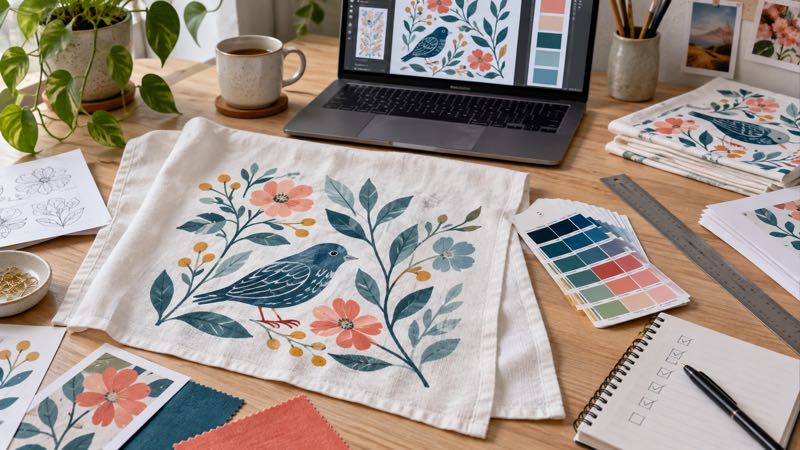
Line weight is one of the easiest details to miss. A fine line may look elegant on a tablet, but cotton has texture. Very thin marks, pale outlines and small type can soften once printed.
This matters for artists and illustrators, but it also matters for school tea towels with children’s names, community designs with sponsor text, museum shop tea towels with place names, and cafe merchandise with small brand details.
Before you send the file, ask yourself:
- Are the smallest words still readable at the planned towel size?
- Do fine lines have enough contrast against the background?
- Are names, dates or place labels too close together?
- Will the design still be readable after folding?
- Is any important information sitting in a low-contrast colour?
If one part of the artwork worries you, point it out in the first message. A note like “we are unsure whether the small town names will print clearly” is much more useful than waiting until the final stage.
Keep Colour Expectations Practical
Colour on cotton will not behave exactly like colour on a lit screen. That does not mean artwork cannot look beautiful on cotton tea towels. It means the file should be reviewed with fabric, print method and viewing distance in mind.
Pale colours, low-contrast palettes, soft watercolour effects, dark details and very similar tones can all need a closer look. A strong artwork file usually has enough contrast for the design to remain clear without making the towel feel harsh.
For full-colour illustration, maps, painterly artwork or detailed pattern work, the custom digital printed tea towels page is the most relevant product page to review. It explains why artwork detail, colour and cotton fabric need to be considered together.
When you send artwork, include any colour notes that matter. For example, tell us if a particular colour is important for a school identity, exhibition artwork, cafe brand or artist collection. Do not rely only on a phone screenshot.
Leave Safe Area Around Important Details
A tea towel is a textile product, not a flat poster. Edges, hems, folds and packaging can change how the design is seen.
Keep important details away from the very edge unless the design has been planned that way. Borders can be beautiful, but they need careful placement. Names, dates, logos and fine decorative lines should have enough breathing room so they do not feel squeezed by the hem or disappear under a fold.
This is especially important when the towel will be:
- Folded for a gift shop shelf
- Wrapped with a belly band
- Packed as a school or fundraising keepsake
- Displayed in a museum or gallery shop
- Sold online where the first image may show only part of the towel
If packaging is part of the project, mention it early. Artwork that looks balanced when fully open may need a different focal point when folded.
Send the Right File Types
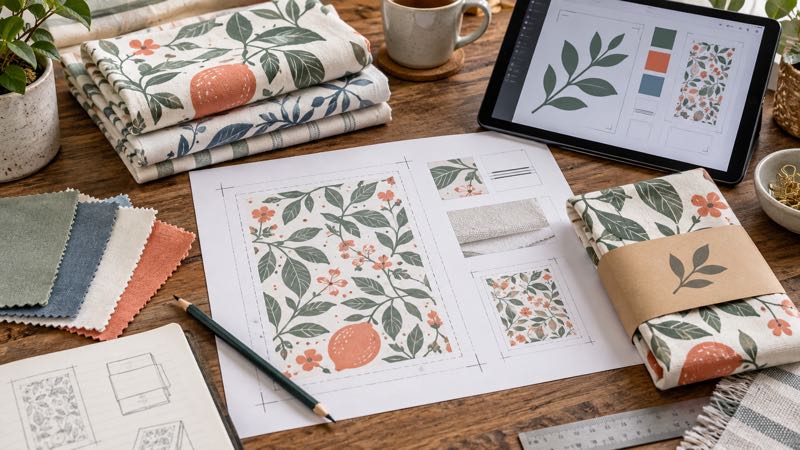
Different artwork starts in different places. Some buyers have professional design files. Some have scanned drawings. Some have paintings, school artwork, maps, repeat patterns or a logo and a rough idea.
Send the best file you have, but be clear about what it is.
Helpful file habits:
- Send a preview image so the design can be understood quickly
- Also send the highest-quality artwork file available
- Keep vector files available for logos, type or simple line artwork when possible
- Avoid compressed screenshots as production files
- If artwork was scanned, check that it is clean, straight and complete
- If several designs are included, name the files clearly
File naming sounds small, but it helps. A simple name such as blue-map-design-final-preview is easier to discuss than a folder full of unnamed exports.
Think About One Design Versus a Range
For artists, gift shops and small brands, the artwork file checklist should also match the product plan.
One strong design may be better for a first cotton tea towel test. A small range can work well when the designs share a clear story, but it also means more files, more colour decisions, more packaging thinking and more quantity planning.
Before asking for a quote, decide whether you are sending:
- One hero design
- Two or three related designs
- A repeat pattern collection
- A school or class artwork layout
- A cafe or small brand product idea
- A museum, gallery or tourist shop range
You can still ask for advice before everything is final. Just say what stage the artwork is in. We often find the most useful conversation begins when the buyer says, “Here is the direction, and here is the part we are unsure about.”
What to Include in the First Message
A good first message does not need to sound formal. It should simply give enough context to review the artwork sensibly.
Send:
- Artwork preview or draft layout
- Best available final file, if ready
- Intended towel size, if known
- Number of designs
- Approximate quantity per design
- Buyer type: artist, school, gift shop, cafe, museum shop, small brand or event
- Notes on fine lines, small text, pale colours, borders or photos
- Packaging or folded display plans
- Delivery country and city
- Target date, if timing matters
- Whether you want to discuss a sample or proof
This does not guarantee price, timing or production details. It simply gives the conversation a better starting point.
When a Sample or Proof Is Worth Discussing
Not every project needs the same sample process. A sample can be useful when the artwork has risk: subtle colour, fine detail, small names, a large order, a retail launch, a museum image, or packaging that affects how the towel will be seen.
A proofing conversation can also be useful before a physical sample. It may help identify whether the file needs stronger contrast, cleaner scanning, a safer border or a clearer design size.
The important thing is to use samples and proofs for the right questions. They can help check layout, scale, colour impression, fabric feel and folded presentation. They cannot rescue a very low-resolution file or replace clear artwork preparation.
Next Step: Send the Artwork and Context
If you are preparing artwork files for custom cotton tea towel printing, send BLANC Tea Towel the artwork preview, best available file, number of designs, quantity range, intended use, packaging notes and delivery country through the contact form.
You do not need to have every answer finished. A clear artwork preview and a practical project note are enough to start checking whether the design is ready for custom printed cotton tea towels, or whether one or two details should be adjusted first.
FAQ
What file should I send for custom tea towel printing?
Send an artwork preview plus the highest-quality source file you have. For detailed artwork, avoid screenshots as final files and prepare the design at the intended print size where possible.
Does cotton tea towel artwork need to be 300 DPI?
For detailed raster artwork, preparing the file at actual print size with strong resolution is a good working habit. The right file also depends on line weight, text size, colour contrast and the type of artwork.
Can children’s drawings or scanned artwork be printed on cotton tea towels?
Yes, scanned drawings can work well when they are clean, complete, high enough quality and arranged with enough space for names, borders and folds. It helps to send a preview before finalising the layout.
Should I send artwork before asking for a quote?
Yes. Artwork helps the supplier understand print method, detail, colour, safe area, sample needs and whether the design fits the intended cotton tea towel product.
Do I need a sample before printing custom cotton tea towels?
A sample is worth discussing when the artwork has fine detail, subtle colour, small text, retail presentation needs or larger order risk. Simpler projects may only need a clear proofing conversation before moving forward.