Fundraising tea towels can work for more than one type of community project. A school class may use them as a keepsake, a museum may use them as a useful souvenir, and a local group may sell them at an event table where supporters want something practical to take home.
This article is a use-case guide, not a made-up customer story. When people contact us about fundraising tea towels, the questions often come from the same places: what artwork to use, how many to plan for, whether to collect pre-orders, how packaging should look, and what details are needed for a quote.
If you are comparing options for a real project, start with the main fundraising tea towels page, then use the notes below to decide which project path sounds closest to yours.
A practical use-case map, not a case study
It is tempting to talk about fundraising tea towels as if every project is the same. In practice, the use case changes the decisions.
A school fundraiser is often built around children's artwork, class names, or a year group memory. A museum or gallery project may begin with an existing artwork, archive image, exhibition theme, or local landmark. A sports club or charity event may need something that is easy to sell from a table. A small shop or cafe may want a product that supports a local cause but still feels retail-ready.
All of those projects can involve 100% cotton custom tea towels, but they do not need the same artwork plan, packaging plan, or quantity conversation.
The useful question is not only "Can we print tea towels?" It is "How will people use, buy, gift, collect, or remember this tea towel?"
That question makes the rest of the project clearer.
Use case 1: school or kindergarten artwork fundraiser
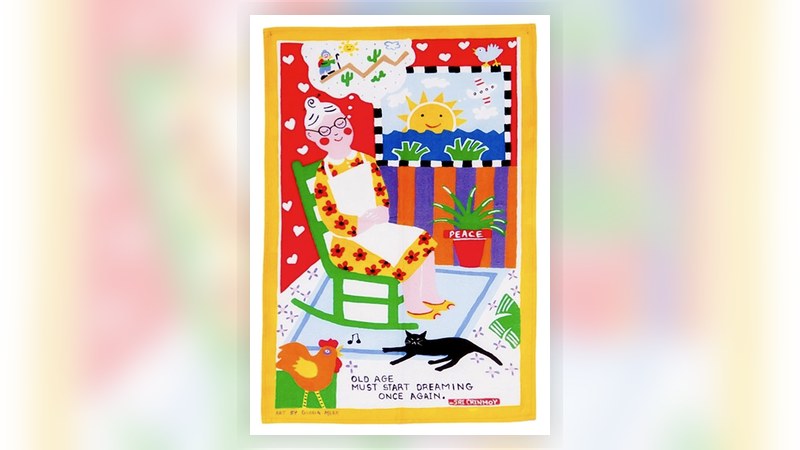
School and kindergarten tea towels are often personal. The value is not only the towel. It is the names, drawings, class year, teacher memory, school identity, or small moment from a child's life.
For this kind of fundraising tea towels Australia use case, the artwork collection stage matters more than people first expect. If drawings are too faint, names are inconsistent, or scans are low quality, the final towel may not feel as clear as the organiser hoped.
A school group usually needs to decide:
- Will the towel show individual drawings, class portraits, handprints, names, or a combined layout?
- Who is checking spellings before the artwork is sent?
- Will families pre-order before production?
- Is the tea towel mainly a fundraiser, a keepsake, or both?
- Does the group need simple packaging for handout day?
The practical advantage of a tea towel is that it can carry many small details in one flat, useful product. But those details need space. Crowding too many names, tiny drawings, or thin linework into the design can make the towel harder to read.
For school-specific planning, this related guide may help: school tea towels Australia FAQ and quote checklist.
Use case 2: museum, gallery, or local history project
Some fundraising groups already have a strong image: an exhibition artwork, a heritage building, a local map, a town illustration, an archive pattern, or a community symbol.
For museums, galleries, and local history groups, the tea towel often sits between fundraising product and souvenir. It should raise money, but it also needs to respect the artwork or place it represents.
In this use case, the organiser should think about:
- Whether the artwork rights are clear for product use
- Whether the image needs a border, caption, date, or location name
- Whether the tea towel will be sold in a shop, at an exhibition, or online
- Whether packaging should include a short story about the project
- Whether the towel needs to feel more like a keepsake or a retail product
This is where cotton fabric and print method should be discussed around the artwork itself. A detailed illustration, watercolour, or archive-style image may need a different review than a simple one-colour logo.
The finished towel should not feel like a random object with an image placed on it. It should feel connected to the exhibition, town, artist, building, recipe, or community memory.
Use case 3: club, charity, or community event table
At a fundraising event, people often decide quickly. They walk past a table, see the product, understand the cause, and decide whether it feels worth buying.
That makes clarity important.
A club, charity, or community group may use tea towels for:
- An annual event
- A sports club fundraiser
- A garden club, food festival, or local market
- A charity campaign
- A community anniversary
- A volunteer thank-you gift
For this kind of project, the tea towel should be easy to explain in one sentence. A busy supporter should be able to understand what the artwork is, who the fundraiser supports, and why the towel belongs to that project.
If the design needs too much explanation, it may still work as a gift, but it may be harder to sell from an event table.
Packaging can help here. A simple belly band, folded presentation, or label can make the towel easier to display, price, and hand over. The packaging does not need to be fancy. It just needs to make the product feel complete.
Use case 4: small shop or cafe supporting a local cause
Not every fundraising project is organised by a committee. Sometimes a gift shop, bookshop, gallery shop, cafe, farm shop, or small brand wants to support a local cause through a limited product.
This can work well when the tea towel also fits the shop's normal customer.
For example, a cafe might use a recipe, food illustration, building sketch, or neighbourhood design. A gallery shop might use an artist collaboration. A tourist shop might use a local landmark or regional theme. A small brand might create a limited tea towel linked to an event or donation campaign.
The important thing is restraint. If the product looks only like advertising, customers may not want to keep it. If it looks like a useful piece of local design, the fundraising message can sit naturally beside it.
Small retailers should consider:
- Whether the design fits their normal display style
- Whether the towel will sit folded, hanging, or in a basket
- Whether packaging should explain the cause
- Whether one design is enough or a small set makes more sense
- Whether they can photograph the towel clearly for online promotion
The same tea towel can raise funds, support a local story, and become a useful retail product if the design is handled carefully.
What changes from one project to another
The product may be similar, but the pressure points are different.
For a school project, the pressure point is usually artwork collection and name accuracy. For a museum or gallery project, it may be artwork rights, colour, and presentation. For a charity event, it may be display, packaging, and explaining the cause quickly. For a shop or cafe, it may be whether the design feels desirable enough to sell beyond the fundraising message.
We often ask about these details early because they affect the quote conversation:
- Project type: school, charity, museum, club, event, shop, cafe, or local group
- Artwork status: finished file, draft layout, scan, photo, or early idea
- Quantity range: approximate is fine at the start
- Selling method: pre-order, event table, retail display, online sale, or gift pack
- Delivery country and city
- Packaging needs
- Sample questions
- Any event, launch, or handout date
For a broader quote checklist, see what to prepare before asking for a 100% cotton custom tea towel quote.
Artwork decisions that make the towel easier to sell
Good fundraising artwork gives people a reason to care. That reason might be personal, local, seasonal, nostalgic, useful, or connected to a cause.
Some artwork ideas are naturally strong:
- Children's drawings and names for school or kindergarten projects
- A local landmark, town map, or regional illustration
- A recipe, food artwork, or cafe sketch
- A club badge, event artwork, or anniversary design
- Museum or gallery artwork with the right permissions
- A cause-related illustration that supporters recognise
The common mistake is trying to include everything. A tea towel has space, but not unlimited space. If the design includes too many tiny elements, the finished product may feel busy rather than meaningful.
If the artwork is detailed or full-colour, custom digital printed tea towels may be worth discussing. If the design is simpler, BLANC Tea Towel can review the artwork and suggest the practical next step.
Packaging, pre-orders, and handout day
Packaging is not only a finishing detail. For fundraising projects, it can make the organising easier.
If supporters pre-order, the group may need a simple way to sort and distribute towels. If the towels are sold from a table, the product needs to be clear at a glance. If the towels are sold in a shop, folded presentation and a label may matter more. If the tea towel is part of a gift pack, the packaging becomes part of the value.
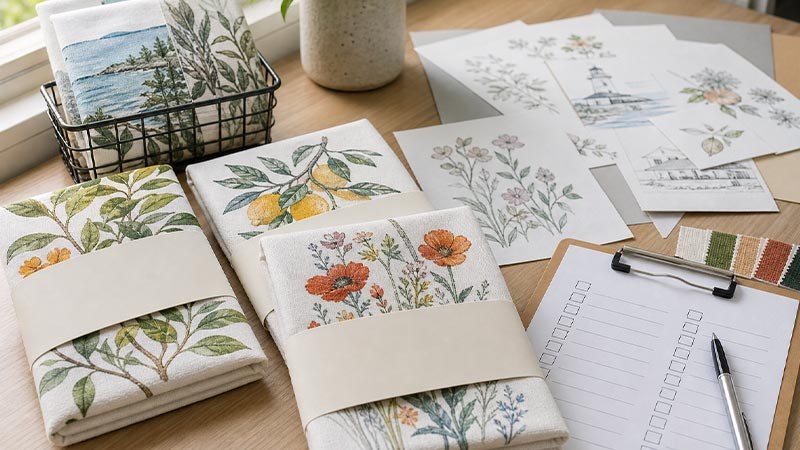
The best packaging choice depends on how the towel will move from the organiser to the supporter.
Ask yourself:
- Will people collect towels from a school, shop, event table, or office?
- Will any towels be mailed individually?
- Does the package need a label, belly band, story card, or simple fold?
- Does the fundraising message need to appear on the packaging?
- Will the group photograph the product before it is sold?
These are small details, but they can make the project easier to manage.
What to send when you ask for a quote
A quote request does not need to be perfect. It just needs enough context for a useful reply.
You can send BLANC Tea Towel:
- The type of fundraising project
- The target country and delivery city
- The planned use case
- A rough quantity range
- The artwork file, draft, scan, photo, or design idea
- The number of designs
- Notes about 100% cotton fabric, size, printing, samples, and packaging
- Any event date, launch date, or handout date
If you are still choosing between project directions, say that. A group that is not sure whether the towel will be sold by pre-order, at an event, or through a shop can still start the conversation.
For general custom towel options, you can also review the custom tea towels page.
A useful next step
If you are planning fundraising tea towels for an Australian school, museum, gallery, charity, club, cafe, shop, or community project, send us the use case first.
Tell us who the towel is for, how it will be sold or gifted, what artwork you have, and where it needs to be delivered. We can then review the artwork direction, cotton tea towel options, printing questions, packaging needs, and quote details in a way that fits the real project.
For a buying checklist that goes deeper into quote preparation, you may also read How To Buy Fundraising Tea Towels: A Buyer Guide For Fundraising Groups.
FAQ
What is a common use case for fundraising tea towels in Australia?
A common use case is a school, community group, museum, club, charity, or small local shop creating a 100% cotton custom tea towel that supporters can buy, keep, gift, or collect after a pre-order campaign or event.
Do fundraising tea towels need to include children's artwork?
No. Children's artwork is common for schools and kindergartens, but community fundraising tea towels can also use local landmarks, maps, recipes, museum artwork, club designs, event themes, or artist illustrations.
Is pre-ordering the best way to sell fundraising tea towels?
Pre-orders can help groups estimate demand before production, but they are not the only option. Some groups sell tea towels at events, through small shops, online, or as part of supporter gift packs.
What should a fundraising group prepare before requesting a quote?
Prepare the project type, use case, delivery city and country, approximate quantity range, artwork idea or file, number of designs, packaging needs, sample questions, and any event or handout date.
Can BLANC Tea Towel help review a fundraising tea towel idea before artwork is final?
Yes. BLANC Tea Towel can discuss the project purpose, artwork direction, 100% cotton tea towel options, print method questions, quantity range, samples, packaging, and delivery details before the final artwork is ready.