Packaging does not need to turn a tea towel into something over-designed. For an artist, a gift shop or a small brand, its practical job is simpler: protect the cotton towel, make the artwork easy to recognise, and give the customer a little context when the towel is folded on a shelf.
That is why it helps to plan packaging at the same time as the artwork, rather than treating it as an afterthought. A beautiful full-print towel can lose its impact if the best part of the design disappears inside a bulky sleeve. Equally, a simple folded towel can feel considered with a well-placed belly band and a short, useful product note.
Start with the way the towel will be seen
Before choosing a label, think about the first view. Will the towel hang open on a rail, sit folded on a table, go into an online order, or be picked up in a gallery or museum shop? That first view should guide the fold, not the other way around.
For a repeat pattern, a folded view may need one recognisable motif near the top. For an illustrated scene, the hero detail may need to remain visible above a band. If the product has an artist name, place name or collection title, decide whether it belongs in the artwork, on the band, or on a separate tag. Giving each job one clear home usually looks calmer than trying to make every element visible at once.
Three packaging directions that suit small retail ranges
A paper belly band
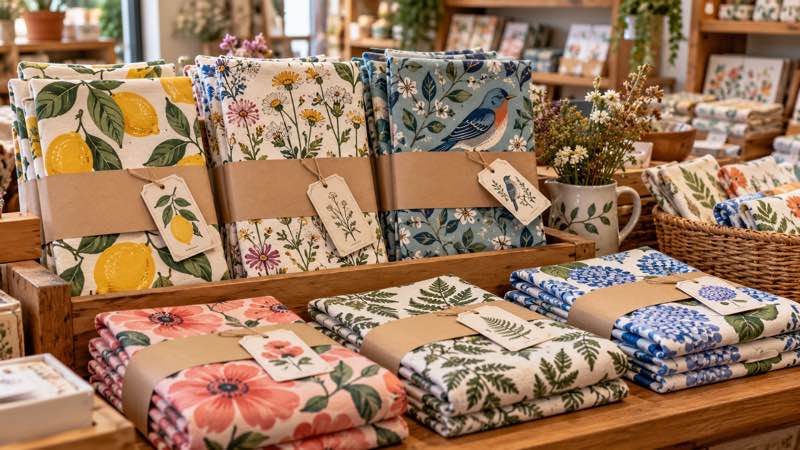
A belly band is a useful starting point for many custom printed cotton tea towels. It can hold the folded towel neatly while leaving enough of the print visible. It is also a good place for a collection name, artist credit, a short story about the design, or simple care information.
Keep the band proportional to the folded towel. A very wide strip can hide the artwork; a narrow one may not stay in place or give enough room for essential text. Test it on an actual folded mock-up before finalising the artwork.
A swing tag
A tag can work well when the towel will be displayed open, hung from a rail, or sold as part of a small artist range. It lets the textile remain visible while giving the buyer a small piece of context: the title of the illustration, the maker, a location reference, or a note about the collection. The most helpful tags are brief. A customer should be able to understand the product without reading a full brand biography in the aisle.
A simple protective sleeve or wrap
For projects that need additional protection in transit or a cleaner folded presentation, a light sleeve or wrap can be appropriate. The decision should still begin with the display view. If most of the front is covered, make sure the visible window or top fold still shows a meaningful part of the design.
For a broader starting point on fabric and artwork-led projects, see our custom tea towels page.
Let the artwork lead the fold
When customers contact us with a finished illustration, we often encourage them to look at the folded product as well as the full file. A tea towel is rarely seen flat for long in a retail setting. That does not mean the artwork must be designed around a band; it means the fold should respect the artwork’s strongest area.
Try a few paper folds at the intended retail size. Notice what appears at the top, which colours sit together, and whether a signature or place name becomes hidden. This small exercise can reveal that a band should move slightly, that a tag is more suitable, or that the product photo needs a different angle.
Information worth including â and what can wait
Packaging is clearer when it answers the customerâs immediate questions. Depending on the project, that may include the artist or brand name, the artwork or collection title, the material, a simple care note, and a web address or social handle.
Not every project needs every item on the front. A museum shop may want the artist credit and exhibition connection. A cafe may want a recipe illustration to remain the focus, with its logo on a small tag. A local gift shop may want the place name to be immediately visible. Start with the one detail a shopper should remember, then use the remaining space carefully.
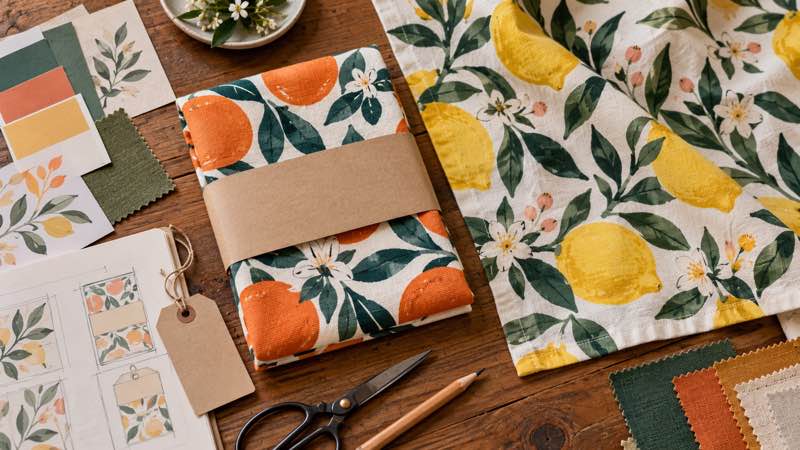
Avoid treating the band as a place to add unverified claims, crowded logos or tiny paragraphs. If a detail is important, it deserves readable type and room around it.
A practical packaging brief for your quote
You do not need a finished packaging file before discussing a project. A short note is enough to begin. Include the artwork or preview, the number of designs, approximate quantity, intended sales setting, preferred folded or open display, any packaging direction you are considering, and the delivery country.
It is also helpful to say which parts are still undecided. That lets the artwork, cotton towel format and retail presentation be considered together instead of locking in a label before the product itself has been reviewed.
If you are planning a small retail launch, send BLANC Tea Towel your artwork preview, quantity range, packaging idea and delivery country through the contact form. We can help identify the practical details worth clarifying before you move from an artwork file to a custom printed cotton tea towel.
FAQ
Do custom tea towels need retail packaging?
Not always. The right choice depends on how the towel will be sold or given. A simple fold and belly band can be enough for many artist, gift-shop and small-brand projects, while a tag or protective wrap may suit a different display or shipping need.
What should go on a tea towel belly band?
Start with the information that helps a shopper understand the product: an artist or brand name, artwork title or place reference, and a concise product note where useful. Keep the band narrow enough that it does not hide the strongest part of the design.
Should packaging be designed before the tea towel artwork is finished?
It is best to consider it early, but the packaging does not need to be final first. A quick folded mock-up can help you decide where a band, tag or label will sit without forcing the artwork to do too many jobs.
What should I send when asking about a packaged tea towel project?
Send an artwork preview or file, number of designs, approximate quantity, intended use or sales setting, any packaging idea, and the delivery country. If you are unsure about the fold or label direction, say so in the enquiry.