Artwork resolution is one of those questions that sounds technical, but it usually starts with a very human worry: "Is my file good enough to print?"
Artists and illustrators ask this before turning drawings, paintings, maps, lettering, or product artwork into cotton tea towels. Gift shops and small brands ask it too, especially when the design includes fine detail or words that need to stay readable.
This digital printed tea towels FAQ is written for that moment before quotation, when you have artwork on screen and you want to know whether it is ready to send. The short answer is simple, but the useful answer depends on final size, artwork type, and how the towel will be sold or used.
Short answer
Send the best artwork file you have, plus the intended towel size and a preview image.
For raster artwork such as scanned paintings, Photoshop files, JPGs, PNGs, or Procreate exports, a file prepared at the final print size with around 300 dpi is usually easier to review. But dpi by itself is not a magic guarantee. A file can say 300 dpi and still be too small if it is stretched far beyond its original size.
For vector artwork such as Illustrator files, logos, simple lettering, or clean shapes, resolution is less about pixels and more about whether the file is editable, outlined correctly, and placed at the right scale.
When customers contact us, we normally look at the artwork and the product plan together. A delicate watercolour, a dense city map, a repeat pattern, and a bold cafe logo do not need the exact same kind of file check.
Resolution means final-size clarity
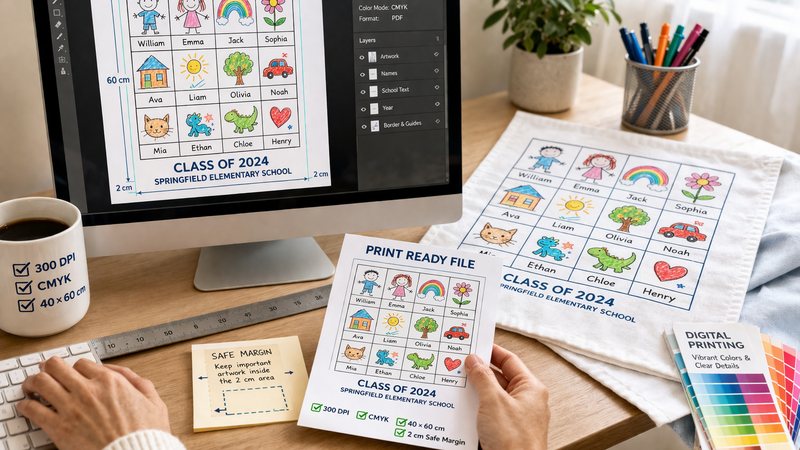
The important question is not only "What is the dpi?" It is "Will the artwork still look clear at the final printed size?"
A small phone image can look sharp on screen because the screen is small and bright. The same image may fall apart if it is enlarged across a tea towel. Edges become soft, fine lines break up, and text that looked readable in a zoomed design file becomes hard to read on fabric.
For custom digital printed tea towels, the finished product matters as much as the file number. A design may be printed across the full towel, placed in the centre, arranged as a border, or repeated as a pattern. Each layout changes how much the artwork needs to stretch.
A useful file check usually asks:
- What is the intended finished tea towel size?
- Will the artwork fill the whole towel or sit in one area?
- Does the file include small text, thin lines, maps, or signatures?
- Is the artwork a scan, a photo, a digital illustration, or vector art?
- Will the towel be folded, banded, hung, or sold online?
That last question may not sound like a resolution issue, but it affects what people actually see first.
What changes the answer for artists and illustrators
Artwork-led tea towels often carry more detail than a simple promotional item. That is part of their appeal. A customer may buy the towel because it feels like a small piece of art, a place memory, a recipe, or a giftable design.
Here are the file situations we would pay attention to first.
Hand-painted or scanned artwork
If the original artwork was painted or drawn by hand, a good scan is usually better than a quick phone photo. The scan should be large enough for the final towel size, with clean edges and no shadow from the paper or table.
If the artwork has a paper texture, brush marks, pencil lines, or soft washes, those details can be part of the design. The point is not to remove every natural mark. The point is to avoid accidental blur, low light, or compression that was never meant to be printed.
For more on preparing artwork before a quote, see How Artists Should Send Files For A Custom Printed Cotton Tea Towel Quote.
Small text, signatures, and fine lines
Small text needs a separate check. A recipe line, place name, date, artist signature, map label, or school name may look fine when you zoom in on a screen. On cotton, it has to work at real viewing distance.
Thin pale lines over a light background are also risky. So are tiny dark details inside a dark colour area. Digital printing can handle detailed artwork, but cotton is not glossy paper. The fabric texture can soften very fine marks.
If words must be read, tell us which words matter most. Some lettering is decorative; some is essential. That difference helps us give better feedback.
Full-towel artwork needs more file data
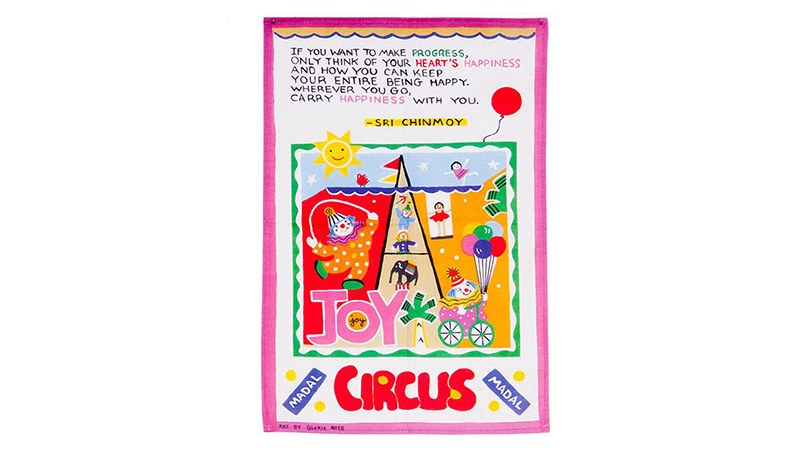
If the artwork covers the whole towel, the file usually needs more information than a small centred logo. This is especially true for full-colour illustration, city maps, large paintings, surface patterns, or designs with a border close to the towel edge.
We often check whether the design has enough margin and whether important details sit too close to the edge. Even with good resolution, a beautiful border can feel awkward if it is too tight for the finished product.
If the towel will be folded for a gift shop or gallery shop, it is worth thinking about the folded view too. The strongest part of the artwork may need to appear in the visible panel.
Vector files are helpful, but not for every artwork
Vector files are useful for logos, simple linework, icons, typography, and flat artwork. They can usually scale more cleanly than a low-resolution raster file.
But not every artwork should be forced into vector format. A watercolour painting, pencil drawing, or textured illustration may lose its character if it is poorly converted. In those cases, a high-quality scan or layered raster file may be the better starting point.
If you are unsure, send both: the working file and a flattened preview. The preview helps everyone see the intended look, while the working file gives more room to check scale and print readiness.
Common questions before sending a file
Is 300 dpi always required?
It is a good practical target for many raster files at final print size, but it is not the only thing we check. Final dimensions, artwork source, text size, line weight, and file quality all matter.
Can I send a JPG?
Yes, a JPG preview is useful for discussion. For production review, the original file may still be better if it has more detail or editable layers. A heavily compressed JPG can create soft edges or blocky texture.
Is a Canva, Procreate, Photoshop, or Illustrator file acceptable?
Often, yes. The question is whether the export is large enough and whether the artwork is prepared at the correct final size. If you are using Procreate or Canva, export the highest-quality version available and include the intended towel size in your message.
What if my artwork is low resolution?
Do not discard the project immediately. Send the file and tell us what the original source is. Sometimes the artwork can be rescanned, re-exported, simplified, or placed at a smaller scale. Sometimes a sample or redraw conversation is more sensible.
Do you need the final production file before quoting?
For an early quote, a clear preview, size idea, design count, quantity range, and delivery country can be enough to start the conversation. For production, the final artwork will need a closer check.
What to send BLANC Tea Towel
To reduce back-and-forth, send the artwork together with the product details. A short message can include:
- Artwork preview image
- Original file type, if available
- Intended finished tea towel size
- Whether the artwork fills the whole towel or sits in one area
- Number of designs
- Quantity range
- Delivery country
- Notes about small text, fine lines, maps, signatures, or brand colours
- Whether you want a sample
- Packaging idea, if the towels will be sold retail
This is also where it helps to say who the towel is for. An artist shop, museum store, cafe retail shelf, wedding favour, school fundraiser, or tourist gift project may need different decisions about detail, folding, packaging, and quantity.
If you are still comparing the broader buying path, this guide may help: How To Buy Digital Printed Tea Towels For Artists And Illustrators.
How resolution affects quotation, samples, and packaging
Resolution itself does not tell the whole quote story. A quote for custom printed cotton tea towels also depends on fabric, size, printing method, number of designs, quantity, packaging, and delivery country.
But artwork readiness can affect timing and decisions. If the file needs checking, rescanning, layout adjustment, or a sample, it is better to know that before you are close to a launch date.
For detailed colour and fine-line questions, read How Digital Printing Handles Colour And Fine Lines On Cotton Tea Towels.
For artwork detail examples, see Artwork Detail On Digitally Printed Cotton Tea Towels.
Recommended next step
If you are preparing digital printed tea towels and are unsure about resolution, send the best file you have, plus the intended towel size, quantity range, delivery country, and any notes about small text or fine detail.
We can then look at the artwork in the context of the finished product, not just as a number in a file window. That is usually the fastest way to decide whether the file is ready for a quote, a sample, or a more detailed artwork check.
FAQ
What artwork resolution is needed for digital printed tea towels?
For raster artwork, a file prepared at the final print size with around 300 dpi is often easier to review, but final size, file quality, small text, line weight, and artwork source all matter. Send the intended towel size with the file so it can be checked properly.
Can I send artwork before it is fully print-ready?
Yes. For an early quote, you can usually send a clear preview, size idea, design count, quantity range, and delivery country. The production file can be checked more closely before sampling or final production.
Are vector files better than JPG or PNG files?
Vector files are helpful for logos, typography, icons, and clean linework because they can scale cleanly. For paintings, drawings, and textured artwork, a high-quality scan or original raster file may be better than a forced vector conversion.
What if my artwork includes very small text?
Small text should be checked at the final printed size. Tell us which words must stay readable, especially for maps, recipes, signatures, dates, place names, or school and event designs.
Should I order a sample if resolution is uncertain?
A sample can be useful when the design depends on fine detail, small text, subtle colour, retail presentation, or future reorders. It helps you judge the real cotton tea towel instead of relying only on the screen preview.